
Key takeaways
What matters before you keep reading
01
The manufacturing process works better when the factory receives a complete tech pack before quoting or sampling.
02
Sampling, fit review, grading, and production all depend on clear measurements, BOM, construction notes, and current garment context.
03
AI-generated tech pack drafts can shorten the path from garment references to manufacturer-ready documentation.
Reader guide
Reader guide
A quick frame before the workflow details.
For
Apparel founders, product developers, designers, and teams preparing for sampling or production.
Read when
Best read before contacting manufacturers, requesting quotes, or planning a first production run.
You'll get
A stage-by-stage manufacturing map, documentation checklist, and guidance on where the tech pack controls risk.
On this page
Follow the article through the long read and keep your place.
On this page
12 sections
The clothing manufacturing process is the path from garment idea to physical product. The exact steps vary by category and factory, but the same pattern appears across most apparel production workflows: define the product, document it, source it, sample it, review it, approve it, produce it, inspect it, and ship it.
Many manufacturing guides explain the stages. The part that often gets buried is documentation quality. A factory cannot manufacture the garment in your head. It needs a clear handoff.
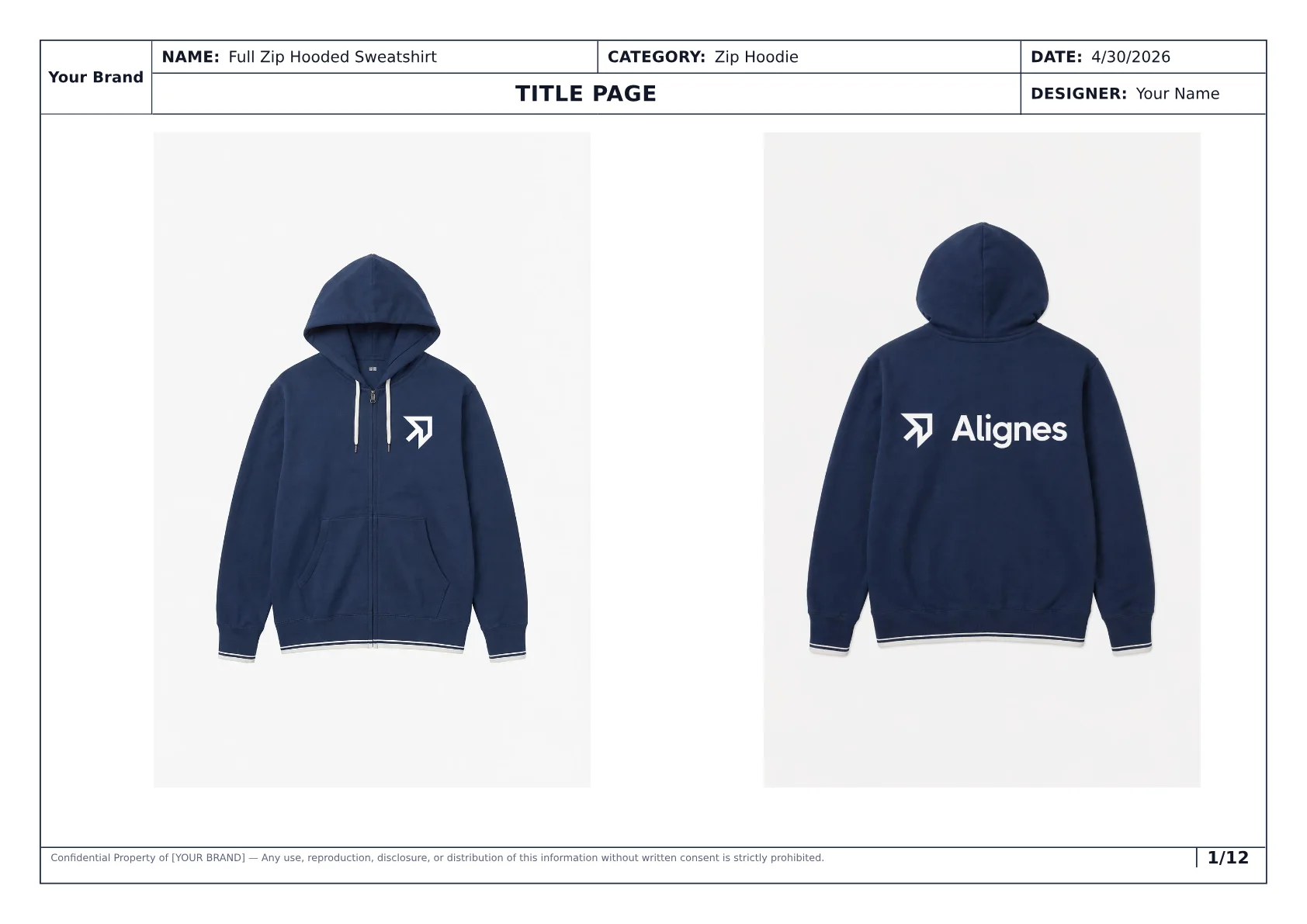
The tech pack is the production document that connects design intent with factory sampling, costing, and review.
The clothing manufacturing process at a glance
Most apparel teams move through these stages:
- Product definition
- Tech pack creation
- Material and trim sourcing
- Manufacturer outreach and costing
- First sample
- Fit review and revisions
- Grading and size set
- Pre-production approval
- Bulk production
- Quality control and shipment
The stages are sequential, but information loops backward. A sample reveals fit issues. A sourcing constraint changes the BOM. A construction issue changes callouts. That is why the current tech pack matters throughout the process.
Stage 1: Product definition
Before manufacturing starts, the team needs a clear garment direction:
- garment category,
- fit intent,
- sample size,
- size range,
- target price or quality level,
- visual references,
- material direction,
- construction priorities,
- branding and artwork needs.
If the product definition is weak, everything after it gets more expensive to clarify.
Stage 2: Tech pack creation
The tech pack translates the garment direction into a document the factory can use.
It should include:
- style overview,
- front and back visuals,
- callouts,
- measurements and POMs,
- graded measurements or size-range notes,
- BOM,
- construction details,
- trims and labels,
- colorways,
- artwork,
- packaging or handoff notes,
- export file and date.
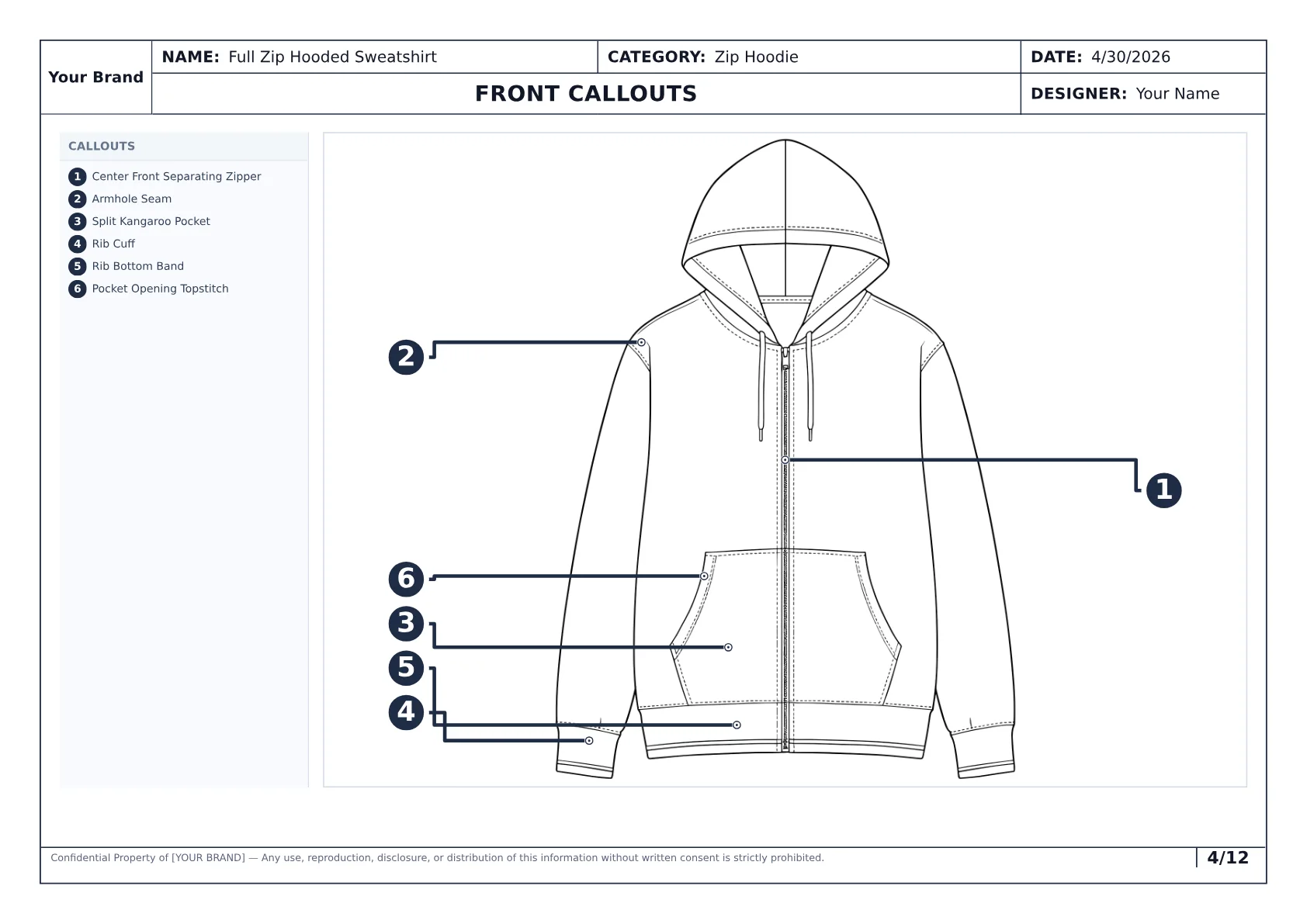
Callouts reduce interpretation risk by attaching production notes to exact garment areas.
Stage 3: Material and trim sourcing
Sourcing is where the garment's cost, feel, quality, and feasibility begin to become real.
The BOM should help the team and factory discuss:
- shell fabric,
- linings or secondary fabrics,
- rib or reinforcement materials,
- trims and hardware,
- labels,
- artwork method,
- thread,
- packaging,
- supplier notes if selected, or substitution notes if needed.
If the BOM is empty or vague, the factory has to make assumptions before costing.
Stage 4: Manufacturer outreach and costing
Once the tech pack has enough detail, the team can contact factories or sourcing partners.
For a serious quote, manufacturers usually need:
- the tech pack,
- estimated order quantity,
- target sample timeline,
- target production timeline,
- target market or compliance needs,
- material expectations,
- size range,
- artwork or branding requirements.
This is where a complete generated draft can help. It gives the team a better starting document before the first factory conversation.
Stage 5: First sample
The first sample tests whether the factory understood the garment and whether the product direction works physically.
Sample review should compare the physical garment against:
- measurements,
- fit intent,
- construction notes,
- materials,
- trims,
- artwork placement,
- colorway expectations,
- remaining questions about the sample.
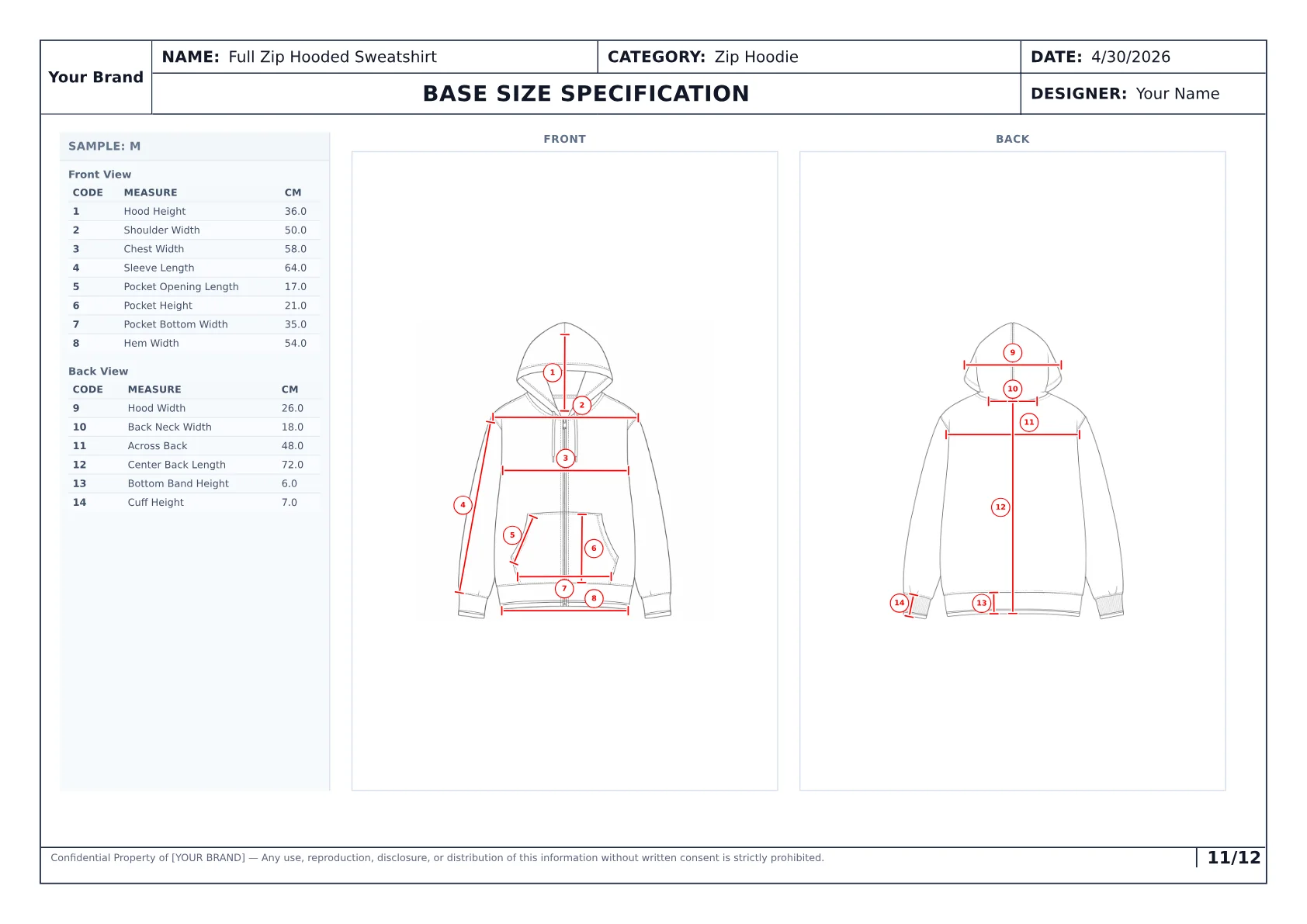
Measurements turn sample review into a structured conversation instead of a subjective reaction.
Stage 6: Fit review and revisions
Fit review creates changes. Those changes should go back into the current tech pack instead of living only in email threads or annotated photos.
Common revision areas include:
- body length,
- width and ease,
- sleeve or inseam length,
- collar, hood, waistband, or cuff behavior,
- pocket placement,
- seam construction,
- material substitution,
- artwork placement.
The goal is to keep the factory working from the newest document, not a memory of the last call.
Stage 7: Grading and size set
Once the sample direction is approved, the team needs size logic. Grading expands the base size into a size range.
The tech pack should make clear whether grading is:
- not started,
- draft,
- ready for review,
- approved for production.
Size-set samples may be needed when the category or fit risk is high.
Stage 8: Pre-production approval
Pre-production approval is the final check before bulk production. At this point, the tech pack should be current and clear.
Review:
- final measurements,
- final BOM,
- final trims,
- final colorways,
- final artwork,
- approved construction details,
- packaging,
- open issues,
- current export context.
Stage 9: Bulk production
Bulk production uses the approved direction at scale. The clearer the handoff, the easier it is for the factory to keep production aligned with the approved sample.
The tech pack does not eliminate manufacturing risk, but it reduces avoidable ambiguity.
Stage 10: Quality control and shipment
Quality control checks whether production matches the approved specs and sample.
QC can reference:
- measurements and any QC tolerances the factory requires,
- construction standards,
- label placement,
- artwork placement,
- material and trim requirements,
- packaging notes.
Where AI-generated tech packs fit
AI is most useful before the first factory handoff. The team has garment references and notes, but it needs a structured document faster.
Production documentation workflow
From garment references to manufacturer-ready review
What changes across the process
- 01
Step 01
Gather garment direction
Images, sketches, style notes, material ideas, fit direction, and artwork context become the input.
- 02
Step 02
Generate the tech pack draft
The draft organizes visuals, callouts, measurements, BOM, construction details, colorways, artwork, and export pages.
- 03
Step 03
Review before outreach
The team checks generated assumptions and sends a cleaner document to the manufacturer.
A stronger AI workflow compresses documentation time while keeping the team in control before factory handoff.
Process showing garment references becoming a generated tech pack and reviewed manufacturer handoff
Checklist
Documents to prepare before serious manufacturer outreach
The factory conversation gets sharper when these pieces are already organized.
Current tech pack
Style overview, visuals, measurements, BOM, construction, colorways, artwork, labels, and export context.
Quantity and timeline assumptions
Estimated order volume, sample target, and production timing.
Material direction
Fabric, trim, artwork, and substitution requirements or pending decisions.
Open questions
Anything the factory should help validate instead of silently guessing.
In practice
See what a manufacturer handoff can look like
The hoodie example shows a complete generated tech pack with overview, callouts, measurements, BOM, construction details, colorways, artwork, and export-ready pages.
View generated tech pack examplesFAQ
Common questions, answered clearly.
The main steps are product definition, tech pack creation, sourcing, costing, sampling, fit review, grading, pre-production approval, bulk production, quality control, and shipment.
Next step
Prepare the production document before factory outreach
Styneo generates structured tech pack drafts with garment specs, measurements, BOM, construction details, callouts, colorways, artwork, and export-ready pages for manufacturer review.